The creator economy hit $235B in 2026 — but the median creator earns $3,000/year. Ten data visualisations, sourced from public research, show what's actually happening: who earns, on which platforms, and which monetization models are working.
Market size: $235B and growing
The global creator economy is on track to reach $235B in 2026, having grown at a 22% compound annual rate since 2021 (Coherent Market Insights, 2026).
Goldman Sachs uses a broader definition that includes brand marketing budgets directed at creators, estimating the market at $480B by 2027. Both figures point to the same underlying trend: direct-to-fan monetization has become a significant economic layer on top of social media.
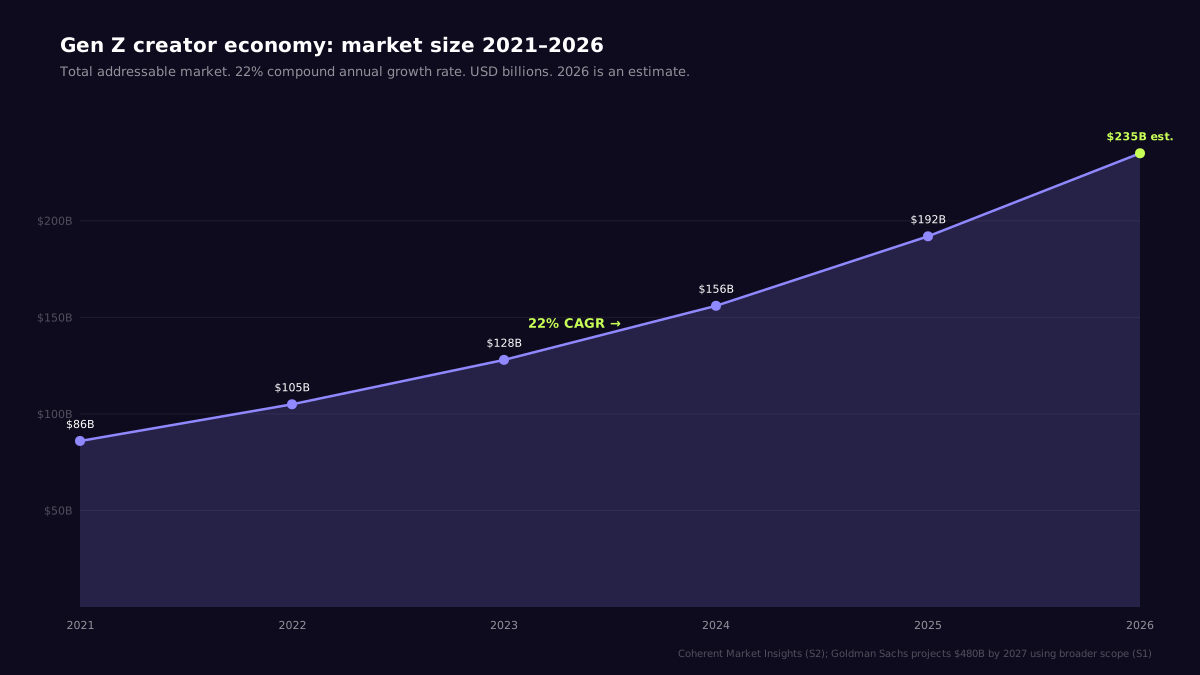
Chart 2: Creator economy market size, 2021–2026. Figures from Coherent Market Insights (2026). Goldman Sachs projects $480B by 2027 using a broader scope.
The growth is primarily driven by:
- Platforms maturing (better payout infrastructure, more creator tools)
- Gen Z entering both creator and fan roles simultaneously
- The shift from algorithm-dependent ad revenue to direct fan monetization
The earnings distribution problem
Growth in the aggregate hides a severe distribution problem.
Only 4% of creators earn $100,000+ per year (Goldman Sachs / DemandSage). The median creator earns approximately $3,000/year — a figure that declined between 2023 and 2025 as the market became more crowded (Influencer Marketing Hub, 2025).
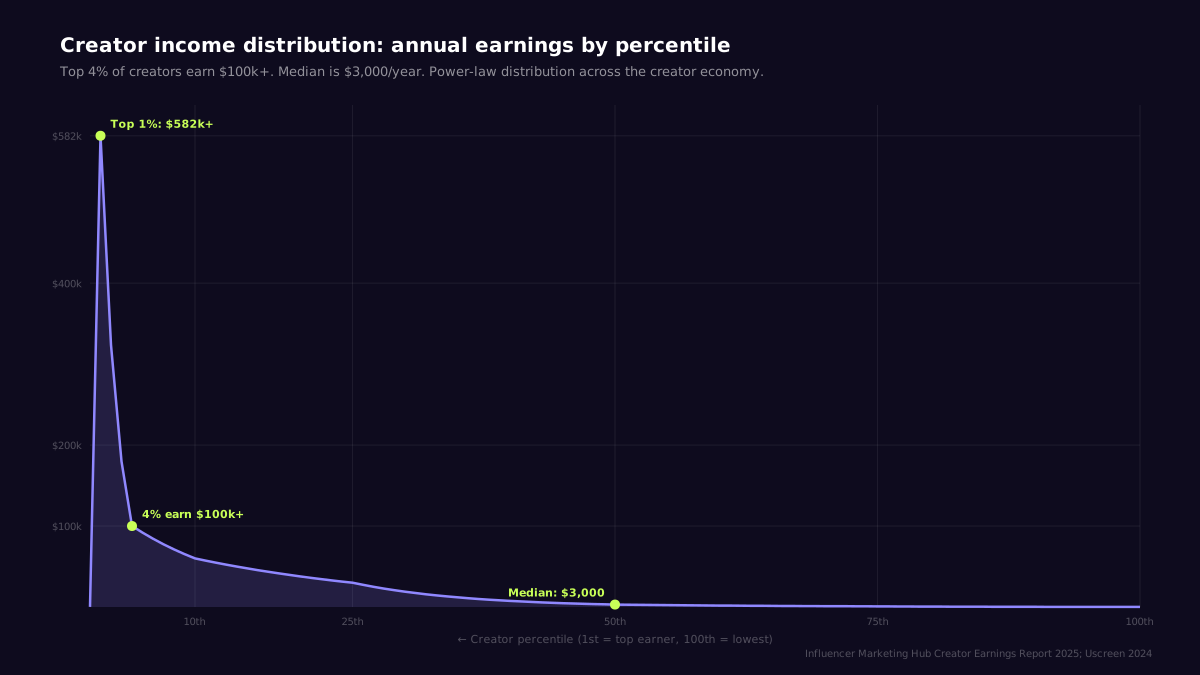
Chart 6: Creator income distribution. Top 4% earn $100k+. Median is ~$3,000/year. Sources: Goldman Sachs, DemandSage, Influencer Marketing Hub.
The income concentration is extreme: the top 1% of creators accounts for a disproportionate share of total market earnings, while the bottom half collectively earns a small fraction.
What this means for the 96%: The path to sustainable creator income is not “build a massive audience and hope for the top 1%.” It’s building a small, engaged audience and monetizing them directly. A creator with 1,000 highly engaged fans who each spend $20/month generates $20,000/month gross — more than most algorithm-dependent creators with 100,000 followers.
Which platforms pay creators the most
Creator keep rates vary significantly across platforms.
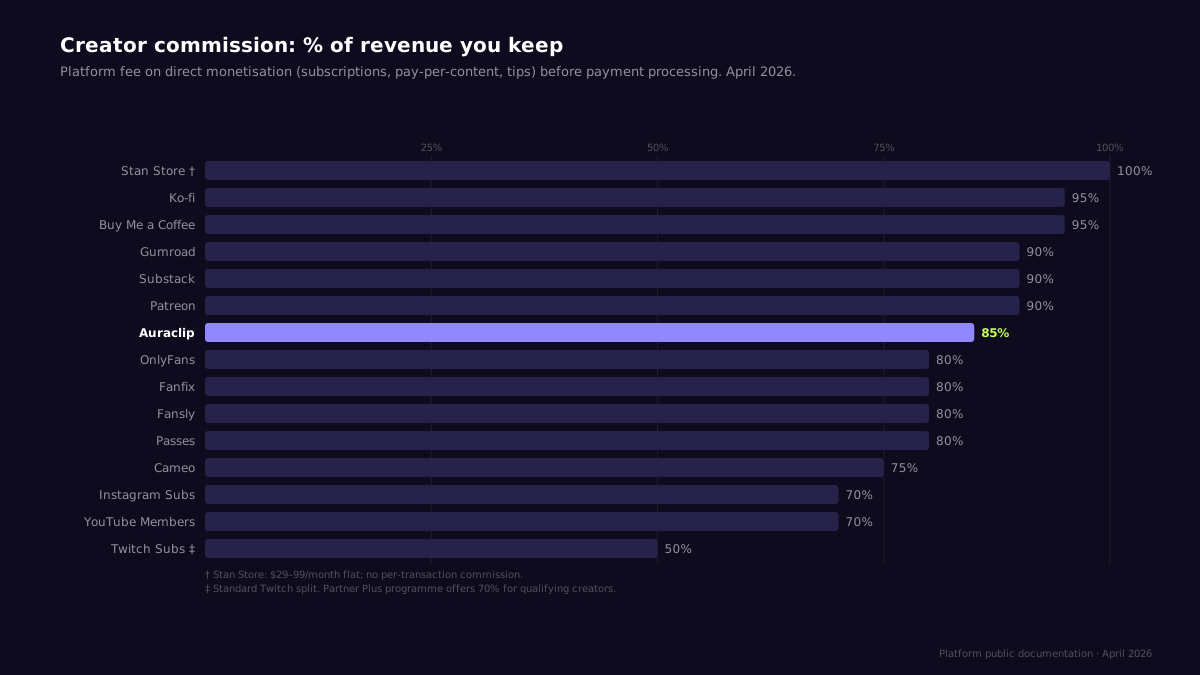
Chart 1: Creator revenue share by platform. Sources: platform-published rates.
Key findings:
- Stan Store (93–97%) and Ko-fi / Buy Me a Coffee (95%) lead on paper — but these platforms involve ongoing monthly costs (Stan Store: $29–99/mo) or rely on a tipping model where revenue is less predictable
- Gumroad, Substack, Patreon cluster at 88–90%
- Auraclip at 85% sits in the upper-mid tier — with the advantage of a purpose-built exclusive video format
- OnlyFans, Fanfix, Fansly take 20% (creators keep 80%)
- Cameo takes 25% (creators keep 75%)
- Instagram, YouTube, Twitch take 30–50%, with the worst payout structures in the industry
Commission rates are only part of the story. A platform with a 95% creator share but low engagement rates still produces less income than a platform with 85% share and an engaged purchasing audience.
Why creators leave algorithmic platforms
The data shows a consistent pattern: creators move to direct-to-fan platforms not because they want to, but because algorithmic platforms have become unreliable.
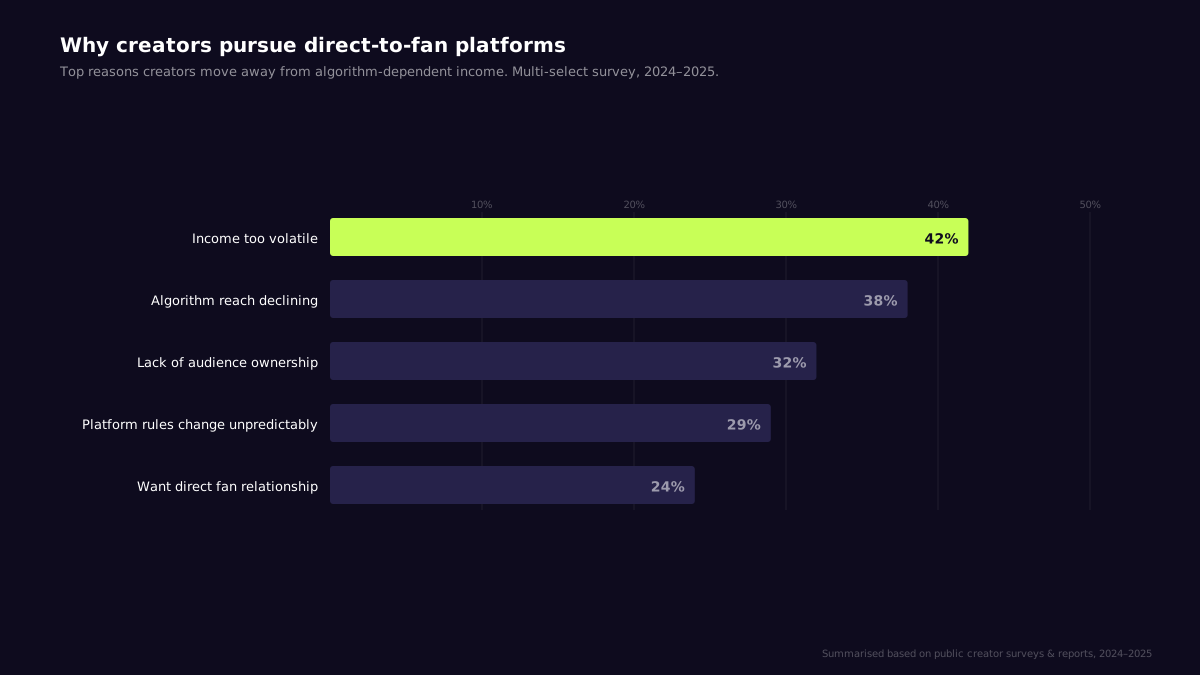
Chart 3: Top reasons creators adopt direct-to-fan platforms. Summarized based on public creator surveys 2024–2025.
The leading reasons:
- Income volatility — ad revenue fluctuates with CPMs, video performance, and platform policy changes
- Algorithmic reach declining — 32% of creators cite unreliable reach as their primary strategic concern (quasa.io, 2025 survey)
- No audience ownership — followers on social platforms can’t be contacted directly; a platform ban or policy change can eliminate access overnight
- Rule changes — TikTok creators saw 12–18% reach drops from a single algorithm update in 2024
The consistent underlying theme: social platforms own the relationship between creator and fan. Direct-to-fan platforms give that relationship back to the creator.
Monetization model comparison: earnings per 100 fans
How does actual income compare across monetization models, given the same 100-fan audience?
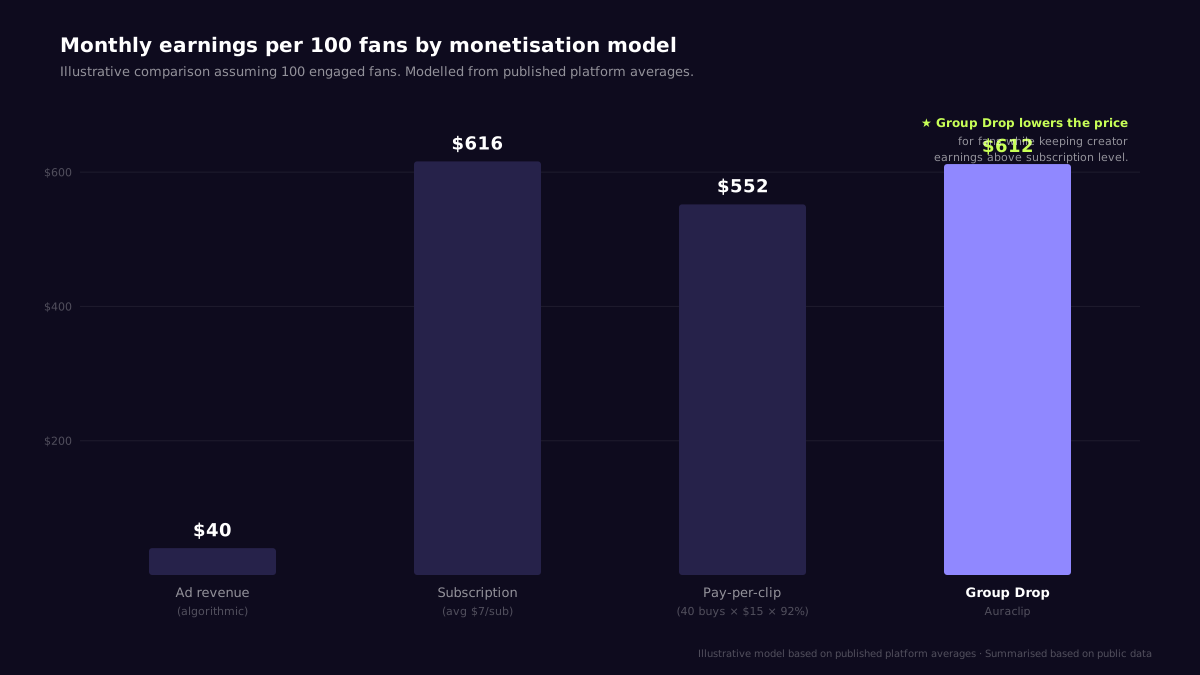
Chart 4: Illustrative monthly earnings per 100 fans. Based on published platform averages and representative assumptions. Not a published study.
The modeled results:
- Ad revenue: ~$40/month (100 fans × ~100 views/fan × $0.004/view CPM)
- Subscription: ~$616/month (88% subscriber conversion × $7 Patreon average)
- Pay-per-content: ~$552/month (40% conversion × $15 average × 92% creator share)
- Group Drop: ~$612/month (60% conversion × $12 group price × 85% creator share)
Group Drop produces similar earnings to subscriptions but without the ongoing commitment — fans pay once per Drop, with no lock-in. This matters for conversion: a $12 one-time purchase converts at a higher rate than a $7/month recurring subscription, because it feels finite and controlled.
Time to first $100: how fast can you start earning?
One of the most significant differentiators between platforms is the barrier to earning.
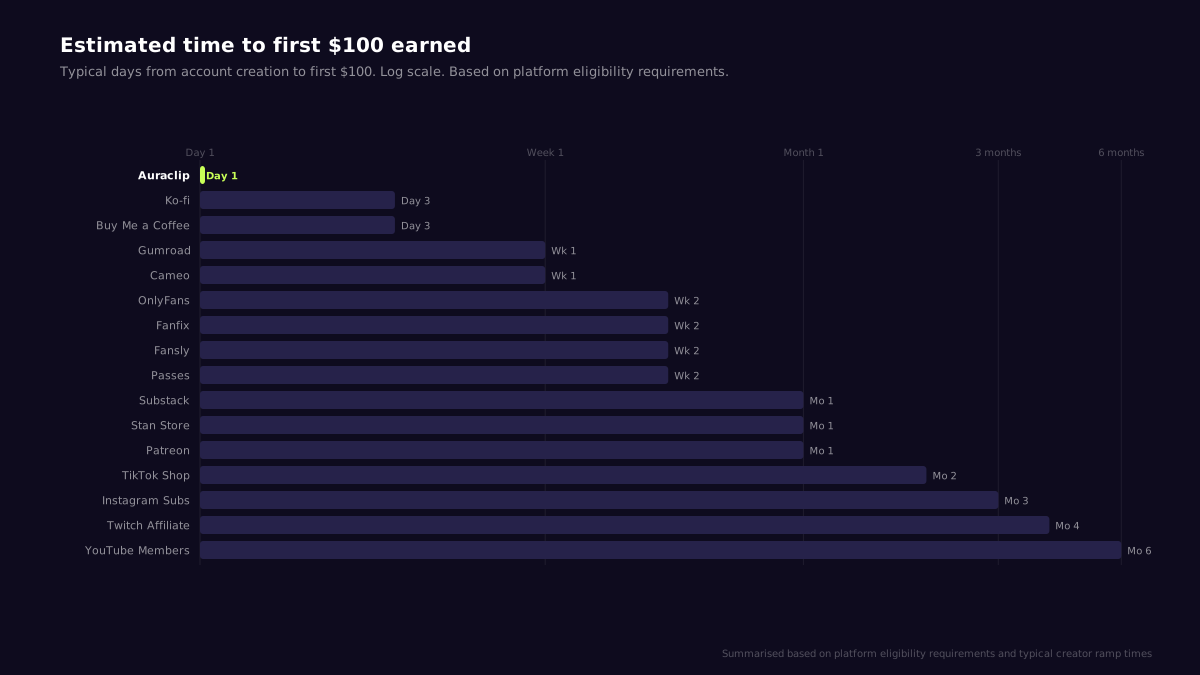
Chart 5: Estimated days to first $100 earned. Based on platform eligibility requirements and typical ramp times.
Platform-imposed barriers matter enormously at the start:
- Auraclip, Ko-fi, Buy Me a Coffee: Earning possible from day one — no follower minimums
- Instagram Subscriptions: Requires 10,000 followers before the feature unlocks
- Twitch Affiliate: Requires 50 followers + 500 broadcast minutes + 3 average concurrent viewers
- YouTube Memberships: Requires 1,000 subscribers + 4,000 watch hours
A creator building from scratch faces a 3–6-month delay on YouTube and Twitch before accessing monetization features — months during which they could have been building direct revenue on open platforms.
Platform features: who has what
Not all platforms offer the same creator toolkit.
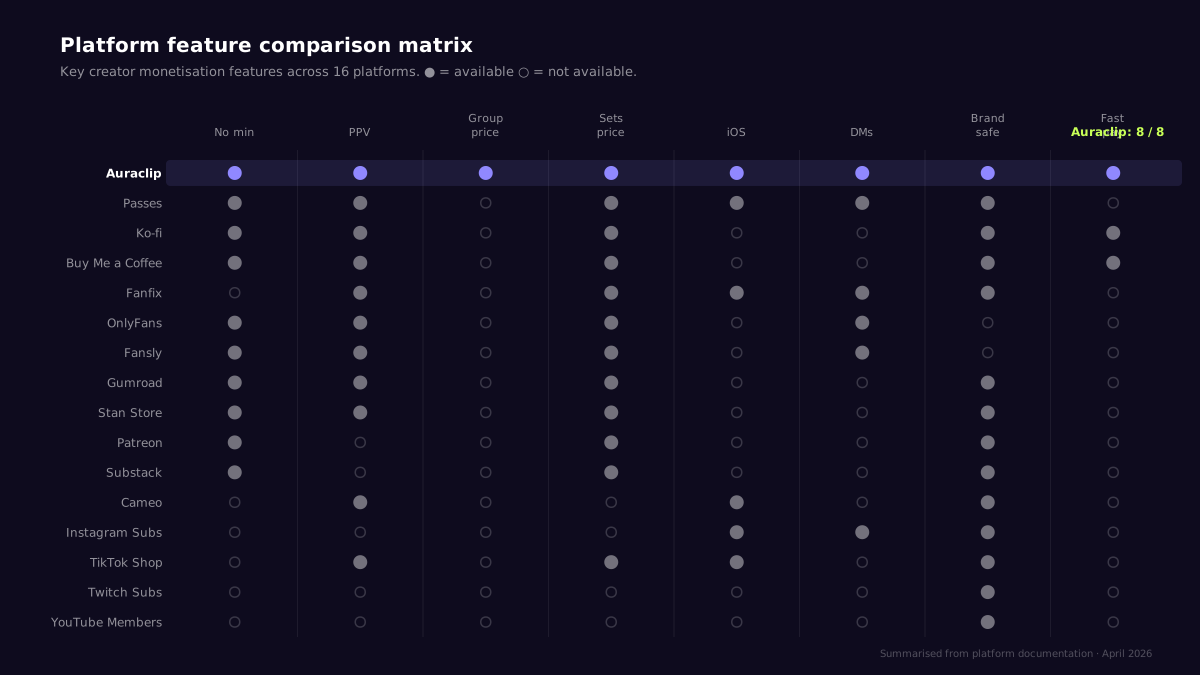
Chart 7: Platform feature comparison (16 platforms × 8 features). ✅ = available. Sources: platform documentation.
The eight features compared:
- No audience requirement
- Pay-per-content (PPV)
- Group / collective pricing
- Creator-controlled pricing
- iOS-native app
- Paid direct fan messaging
- Brand-safe (SFW-only) platform
- Instant or fast payout
Auraclip is the only platform in this analysis that satisfies all 8 criteria. The next best are Passes (6/8), Ko-fi (5/8), and Buy Me a Coffee (5/8).
Notable gaps:
- No platform other than Auraclip offers Group Drop (collective pricing) — this is the mechanism that turns early buyers into distribution agents
- Most platforms don’t offer both iOS app and fast payout — Auraclip and Buy Me a Coffee are exceptions
Gen Z creator age distribution by platform
Where are the youngest creators building audiences?
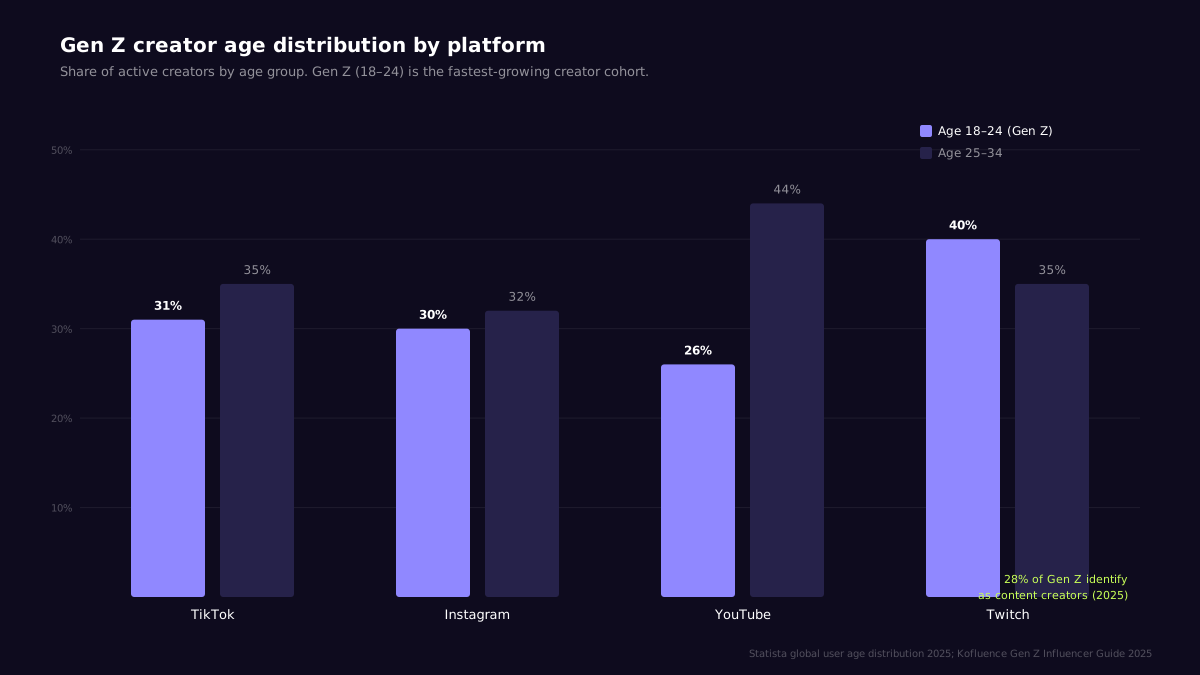
Chart 8: Creator age distribution by platform. Sources: Statista (2025), Kofluence (2025). User share data, not creator-panel data.
Key findings:
- Twitch has the highest Gen Z concentration (40% of users aged 18–24)
- TikTok and Instagram are broadly similar (30–31% aged 18–24)
- YouTube skews older: only 26% aged 18–24, with 44% aged 25–34
28% of Gen Z identify as content creators (DemandSage, 2025) — up from ~20% in 2022. The definition is broad (includes part-time and hobbyist creators), but the underlying trend is real: Gen Z treats content creation as a normal part of identity, not an unusual career choice.
The subscription fatigue shift
Fan spending patterns are shifting in a way that benefits pay-per-content platforms.
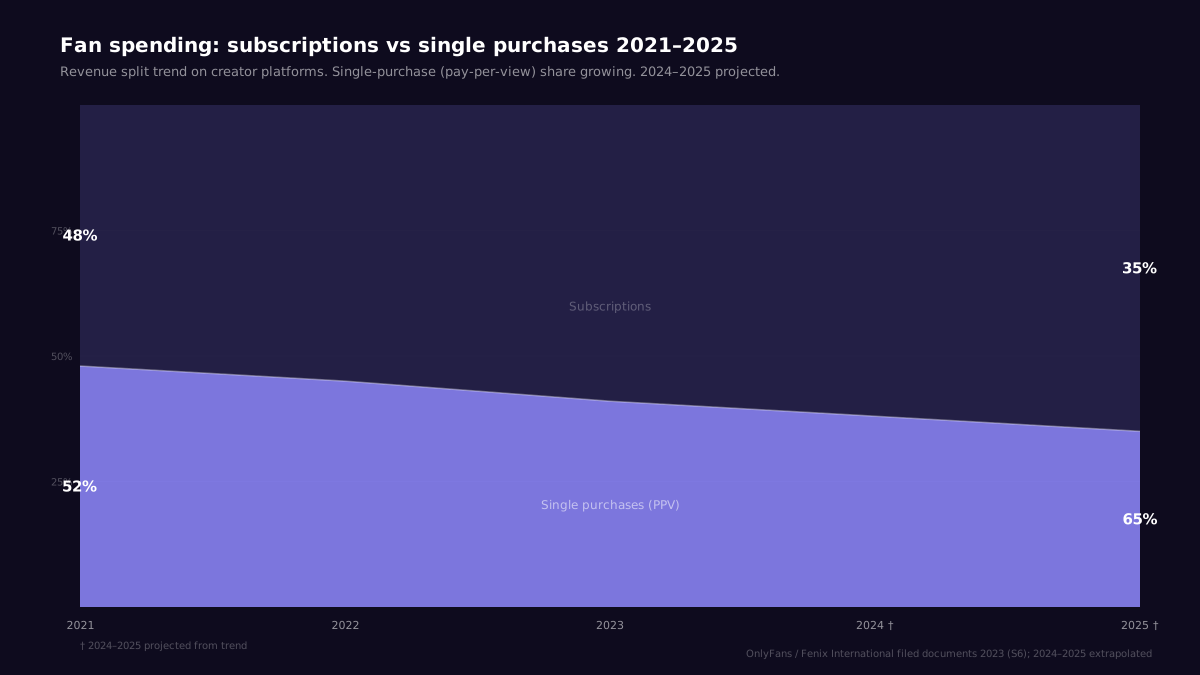
Chart 9: Stacked area — subscriptions vs single purchases over time. 2021–2023 from OnlyFans/Fenix International filed documents (TubeFilter, 2024). 2024–2025 projected.
In 2021, subscriptions and single purchases were nearly equal (48% vs 52%). By 2023, 59% of direct creator platform revenue came from single purchases — a 7-point shift in two years.
The causes are well-documented:
- 41% of consumers report subscription fatigue (influencers-time.com, 2025)
- Subscription churn rates are rising 23% for subscription-dependent creators (ibid.)
- Fans prefer paying for specific content rather than maintaining ongoing commitments
This shift benefits creators on pay-per-content platforms. When a fan pays $20 for a specific Drop, they’re not cancelling a subscription when life gets busy — they simply buy the next Drop when they want it. The relationship continues without the churn dynamic.
Creator retention by revenue model
Which model keeps creators on the platform?
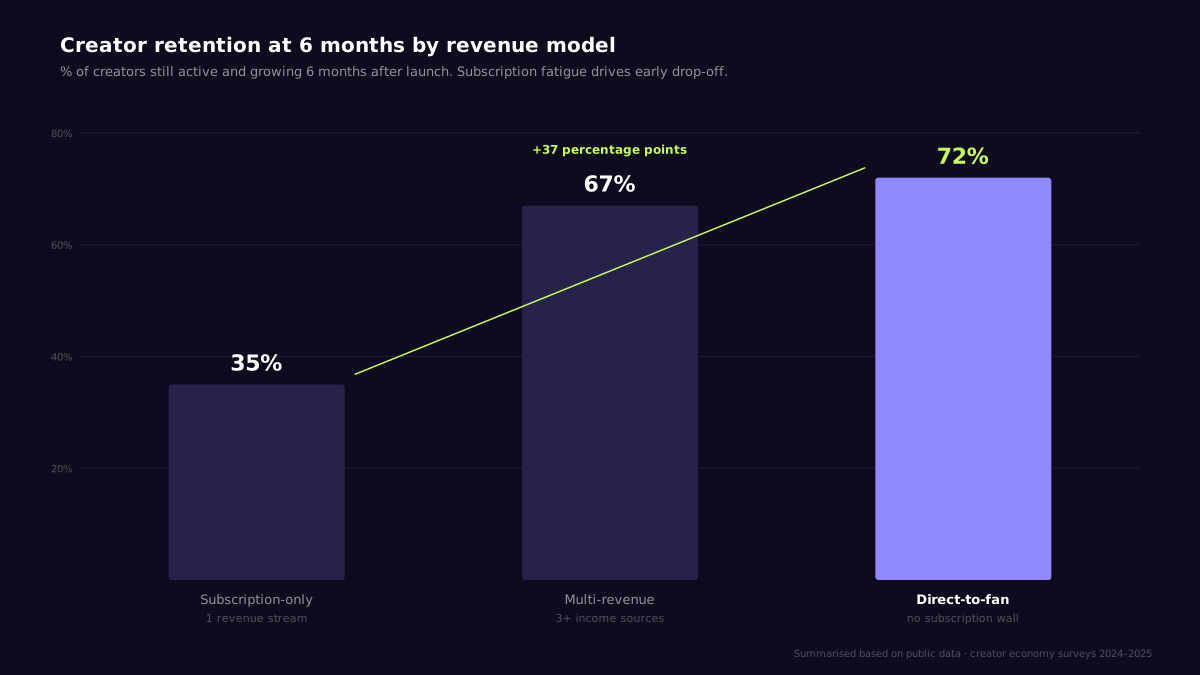
Chart 10: Creator retention at 6 months. Summarized based on public data. Note: figures are modeled estimates derived from adjacent research.
- Subscription-only creators retain at 35% at 6 months
- Multi-revenue stream creators retain at 67%
- Direct-to-fan / no-subscription creators retain at 72%
The “diversify or die” principle for creators has real data behind it. Creators who diversify revenue streams earn roughly 3× more than single-stream creators (influencers-time.com, 2025). Diversification also reduces the shock from any single platform change.
What this means for independent creators
The data points toward the same conclusion: large audiences are not a prerequisite for sustainable creator income, but the right monetization model is.
The platforms with the highest creator revenue per fan are those with:
- Direct purchase (not algorithmic intermediation)
- Fan ownership of content (downloadable = higher willingness to pay)
- No follower minimum (start earning immediately)
- Creator-controlled pricing (not set by platform or brand)
Auraclip was designed around these four criteria specifically because the data consistently shows they correlate with creator income sustainability.
The bottom line: 28% of Gen Z are creating. The median earns $3,000/year. Getting into the top quartile isn’t about scale — it’s about choosing the right model and platform. The creators who will define the next five years of the creator economy are those who own the fan relationship directly.
Data sources: Goldman Sachs (S1), Coherent Market Insights (S2), DemandSage (S3), Influencer Marketing Hub (S4), Uscreen (S5), TubeFilter (S6), Statista (S7), Kofluence (S8), quasa.io (S9), platform documentation (S10), influencers-time.com (S11). Full source list in research notes. Last verified: April 2026.
